
STAY SAFE AT FINGAL BEACH
Local beach safety for Fingal Bay
Fingal Beach is a beautiful, patrolled family beach. Like any surf beach, conditions can change, so the safest place to swim is between the red and yellow flags. If you're planning to explore the northern end or Fingal Spit, there are a few extra things worth knowing.
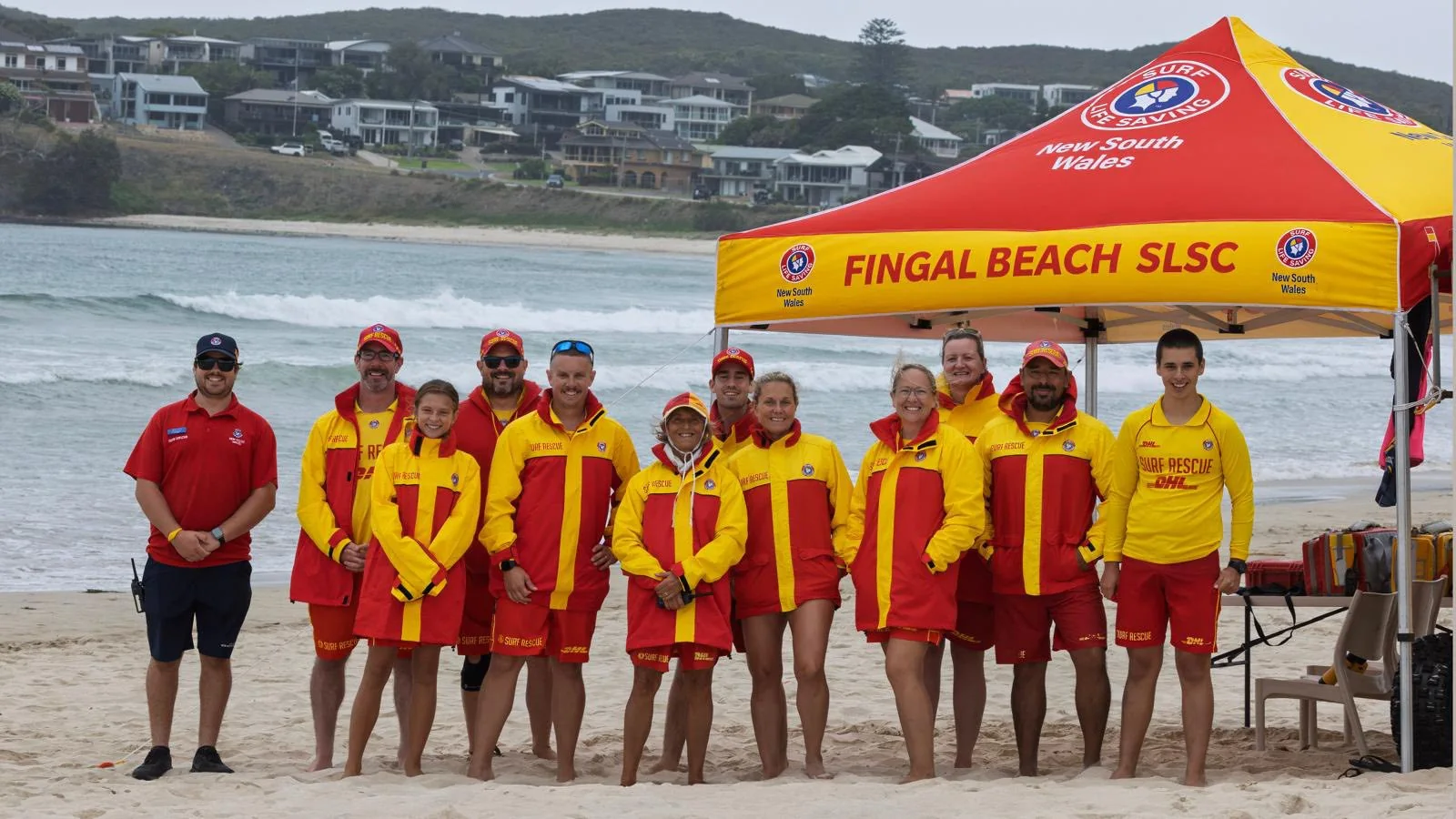
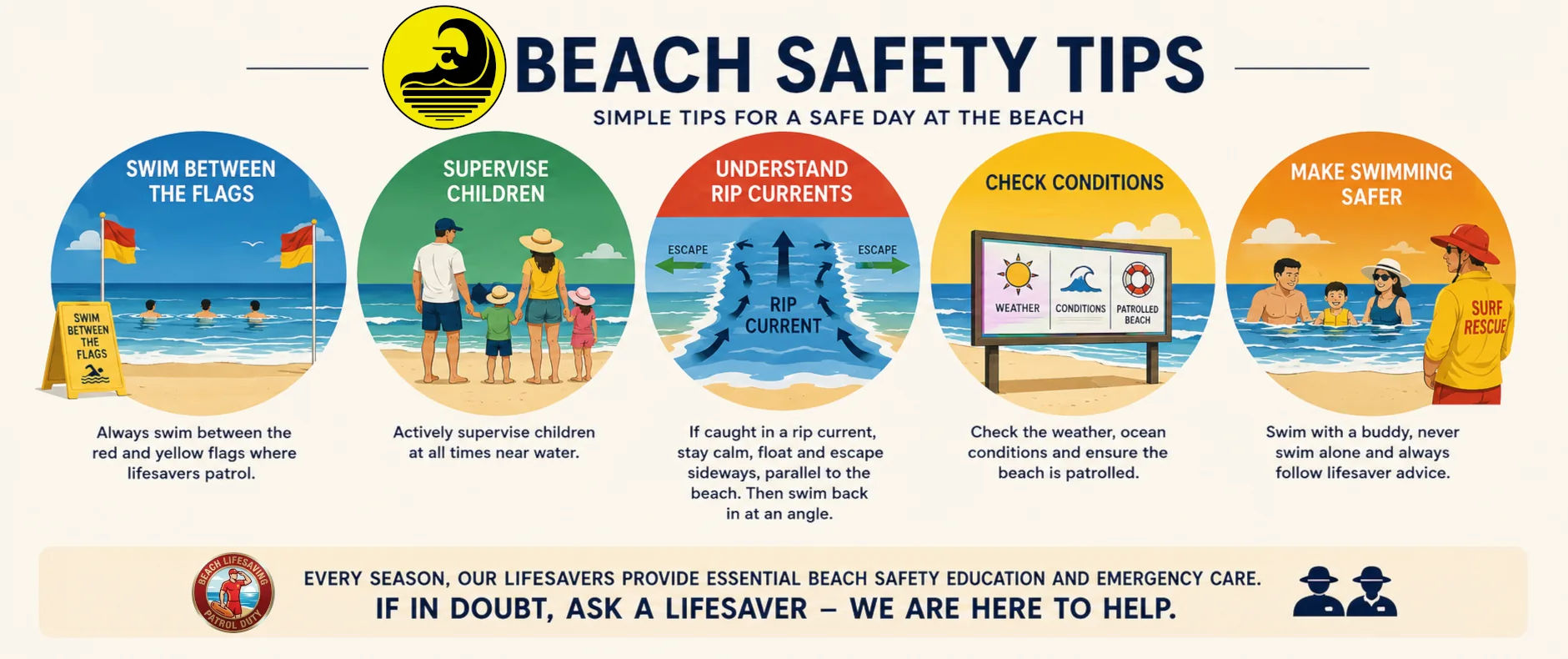
Swim between the flags — look for them, they move
Exploring the spit? Check the tide and conditions first
If caught in a rip — signal, float and conserve energy
Check before you go — Beachsafe app
The Beach at Fingal Bay
Fingal Beach runs south to north, from the sheltered rocky corner locals call Kiddies Corner, through the middle stretch known as Green Hills for the low green scrub on the dunes, up to the sand spit at the northern end.
The area around the surf club is generally the more protected part of the beach and is where patrols are usually based. Conditions become more exposed as you move further north. Sandbanks and surf conditions can change from day to day, and rips can form in different places along the beach — which is why the flags move rather than staying in one fixed location.
Beachsafe rates Fingal 6/10 — moderately hazardous. Conditions around Fingal Spit can differ from the patrolled section of the beach, so we’ve included some specific guidance below.
Remember: Patrol coverage is the area between the red and yellow flags. Look for the flags each time you visit, as their position changes with conditions.
Swim Between the Red & Yellow Flags
The red and yellow flags mark the patrolled area. Between them, trained lifesavers and lifeguards are watching the water and moving the flags as the banks and conditions change.
Look for the flags — don't assume where they'll be. The patrol usually sets up in front of or near the surf club, but when conditions call for it they'll move south to wherever the water is safest that day. Where the flags are is the answer to where to swim.
If you do one thing at Fingal, do this one. 85% of coastal drowning deaths in Australia happen away from patrolled areas.
- • Keep checking — it's easy to drift outside the flags without realising.
- • No flags, no swim.
- • Swim during patrol hours — and always with someone else.
- • Keep children within arm's reach — of an adult who can swim.
- • Ask a lifesaver — if you're unsure about the conditions — that's what we're here for.
For the safest swimming, choose the patrolled area between the red and yellow flags.
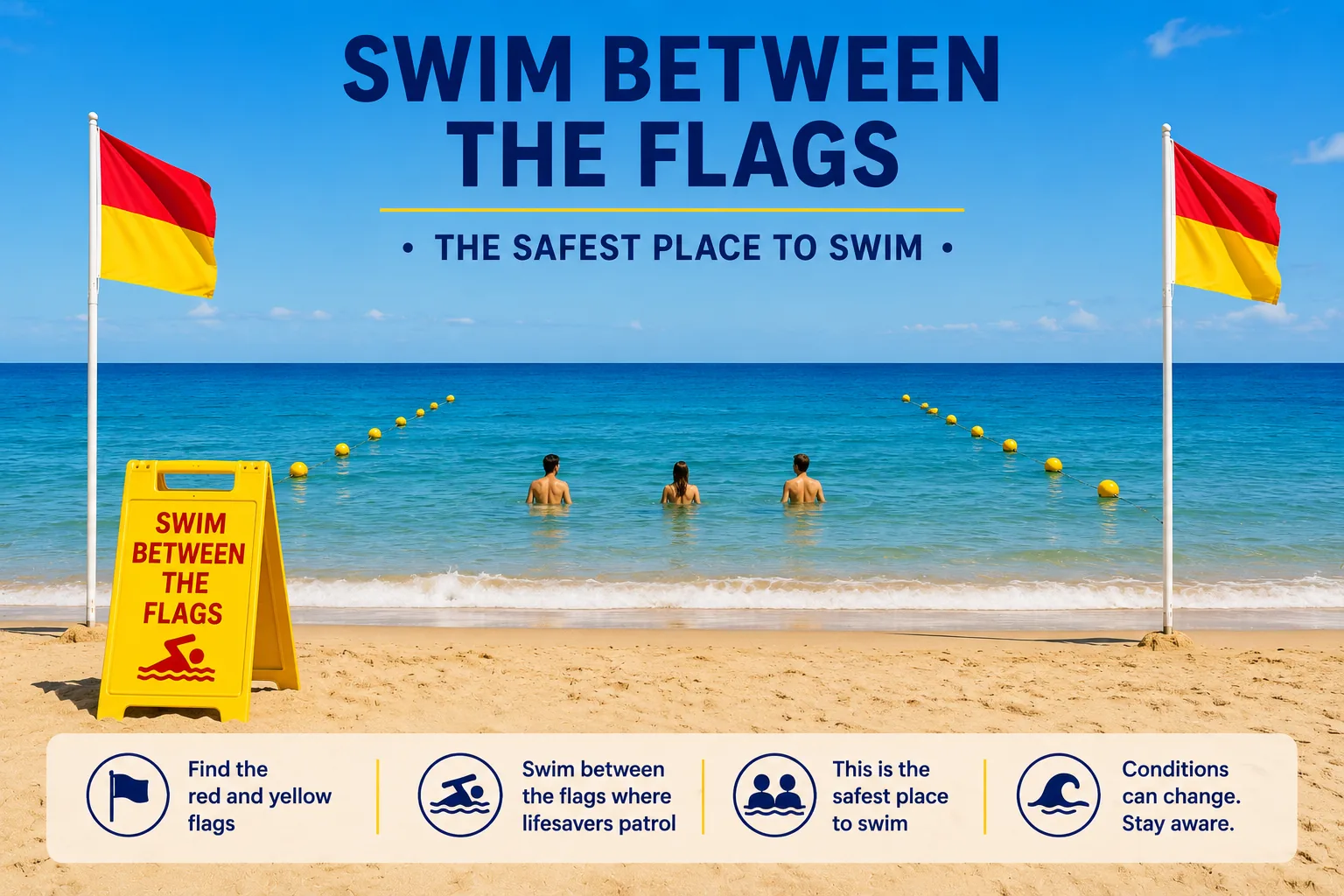
Red & Yellow = patrolled swimming area
Pro tip: The flags move with the conditions. Check you're still between them — and if you're not sure, ask.
Rip Currents
Rip currents are common on Australian surf beaches and can form at Fingal as sandbanks and conditions change. They can be difficult to identify, which is another good reason to swim between the flags — the patrolled area is selected with the day's conditions in mind.
How to Spot a Rip
- • Look for darker, deeper water that looks calmer than what's around it
- • Notice gaps in breaking waves — the surface looks flat
- • Watch for foam, sand or debris moving steadily seaward
- • Look for a rippled patch surrounded by smoother water
Remember: Find where the waves are breaking consistently, then look either side. The gaps are usually the rips.
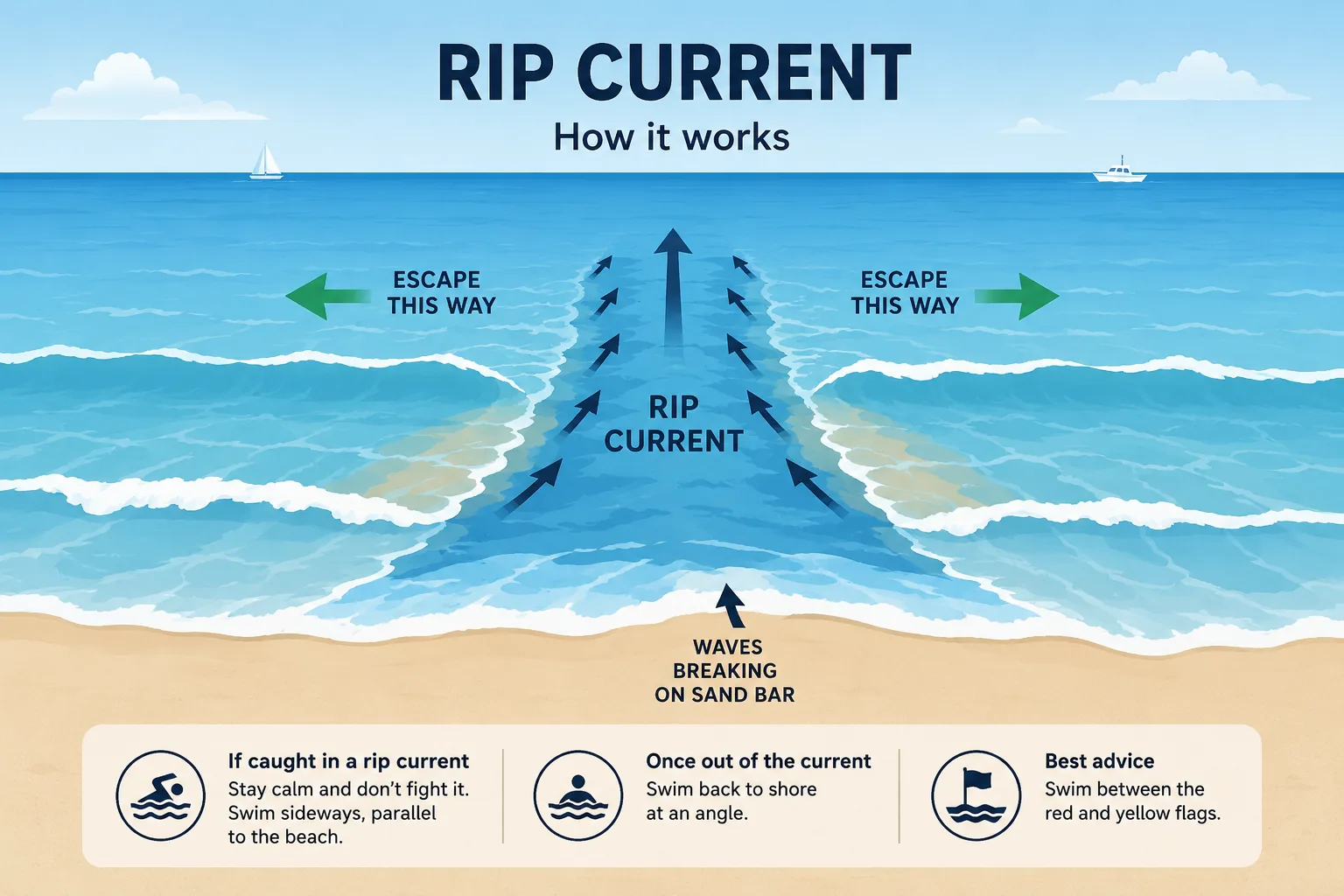
What to Do If You're Caught
Rip currents can carry you away from shore. They do not pull you under. Stay calm, conserve your energy and signal for help.
1. Signal for help
Raise one arm and call out. Lifesavers, lifeguards and surfers are all looking for exactly that.
2. Float and conserve energy
Rips often circulate and can carry you back to a shallow sandbank. Floating on your back saves energy while you wait.
3. Swim out of it — but only if you're confident
If you're a strong swimmer and not tired, swim parallel to the beach, or towards the breaking waves. If you're unsure, go back to option 2.
Key point: Never swim straight back against the current. If what you're doing isn't working, go back to floating and signalling.
Not a confident swimmer? Skip option 3 and go straight to signalling.
Fingal Spit & Fingal Island
Fingal Spit is one of the most recognisable features of the bay, leading towards Fingal Island and the historic Point Stephens Lighthouse in Tomaree National Park. It is also a very different environment from the patrolled swimming area in front of Fingal Beach Surf Life Saving Club.
Tides, swell and deep channels can change conditions at the sandbar quickly. NSW National Parks advises that it is not safe to walk across the spit to Fingal Island and says not to cross in either direction if there is any water over the sandbar.
If there is any water over the sandbar, do not cross.
This is the current safety advice from NSW National Parks and Wildlife Service.
Why conditions change
- • Tides and swell can quickly cover the sandbar
- • Deep channels can form across and around the spit
- • Conditions can change even when the water initially looks calm
- • Beaches within Tomaree National Park are unpatrolled
The safer choices
- • For swimming: use the red and yellow flagged area at Fingal Beach
- • Check current National Parks visitor information and alerts before heading north
- • Do not assume an exposed or shallow-looking sandbar makes a crossing safe
- • NSW National Parks recommends visiting Fingal Island by boat or organised tour
Swimming and visiting the island are two different things.
For a swim at Fingal Beach, stay between the red and yellow flags. If you are planning to visit Fingal Island or Point Stephens Lighthouse, use the current NSW National Parks visitor advice rather than relying on beach conditions alone.
Emergency Response Beacons
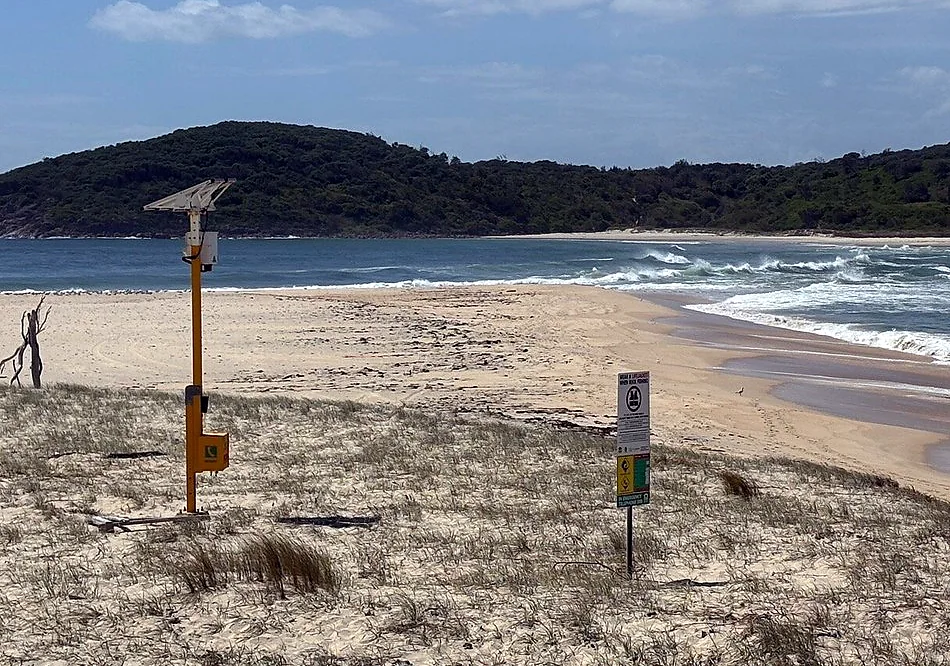
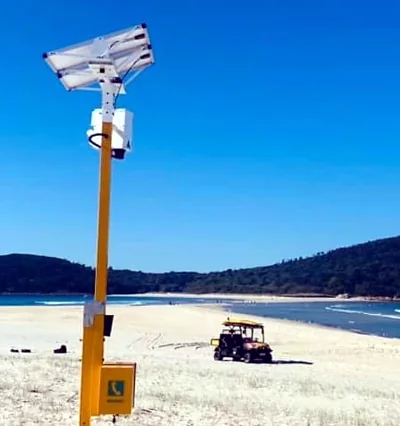
Emergency Response Beacons are installed at key locations along the beach, including near Fingal Spit. They’re tall yellow poles with a solar panel and a white button at head height.
In an emergency, pressing the button connects you directly with the Surf Life Saving NSW State Operations Centre, 24 hours a day. The operator can assess the situation and coordinate an appropriate response.
In an emergency, always call 000
Check Beachsafe Before You Go
Beachsafe is Surf Life Saving Australia's official source for beach information, patrol status and current conditions.
Check it before you leave home, not when you get here.

Beachsafe is Surf Life Saving Australia's official source for beach information, patrol status and current conditions.
In an Emergency
Call 000
Ask for the ambulance or police and provide your location.
What to do:
- • Know your location
- • Follow instructions from emergency services
- • Stay calm and provide clear information
Other contacts:
- • Police: 000
- • Fire Brigade: 000
- • SES: 132 500
- • Marine Rescue: 1800 641 792